On Location: Terceira Island Roadtrip
Driving around the Maui of the Atlantic.
By Gray Shealy
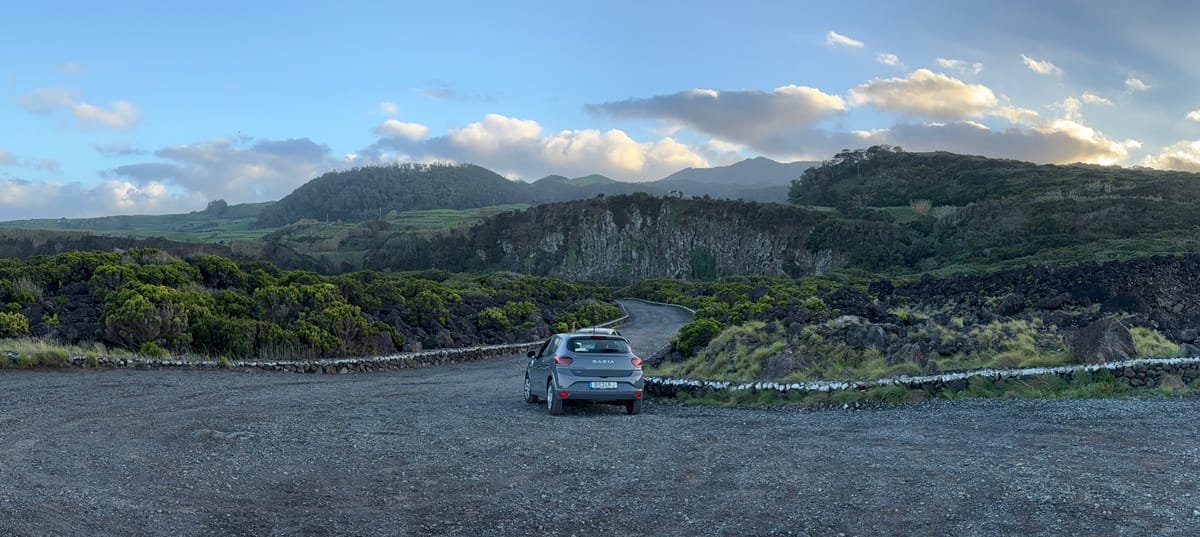
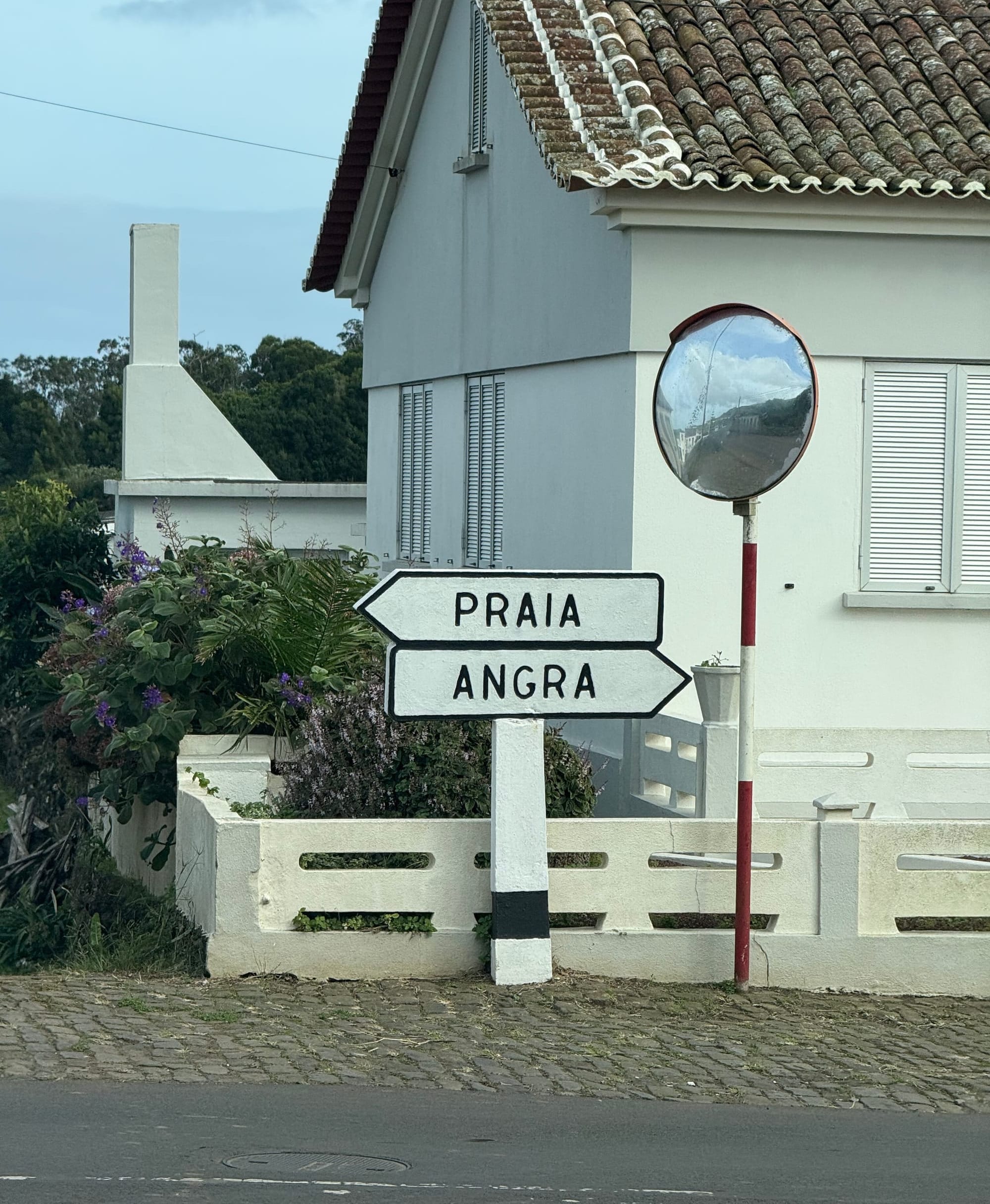
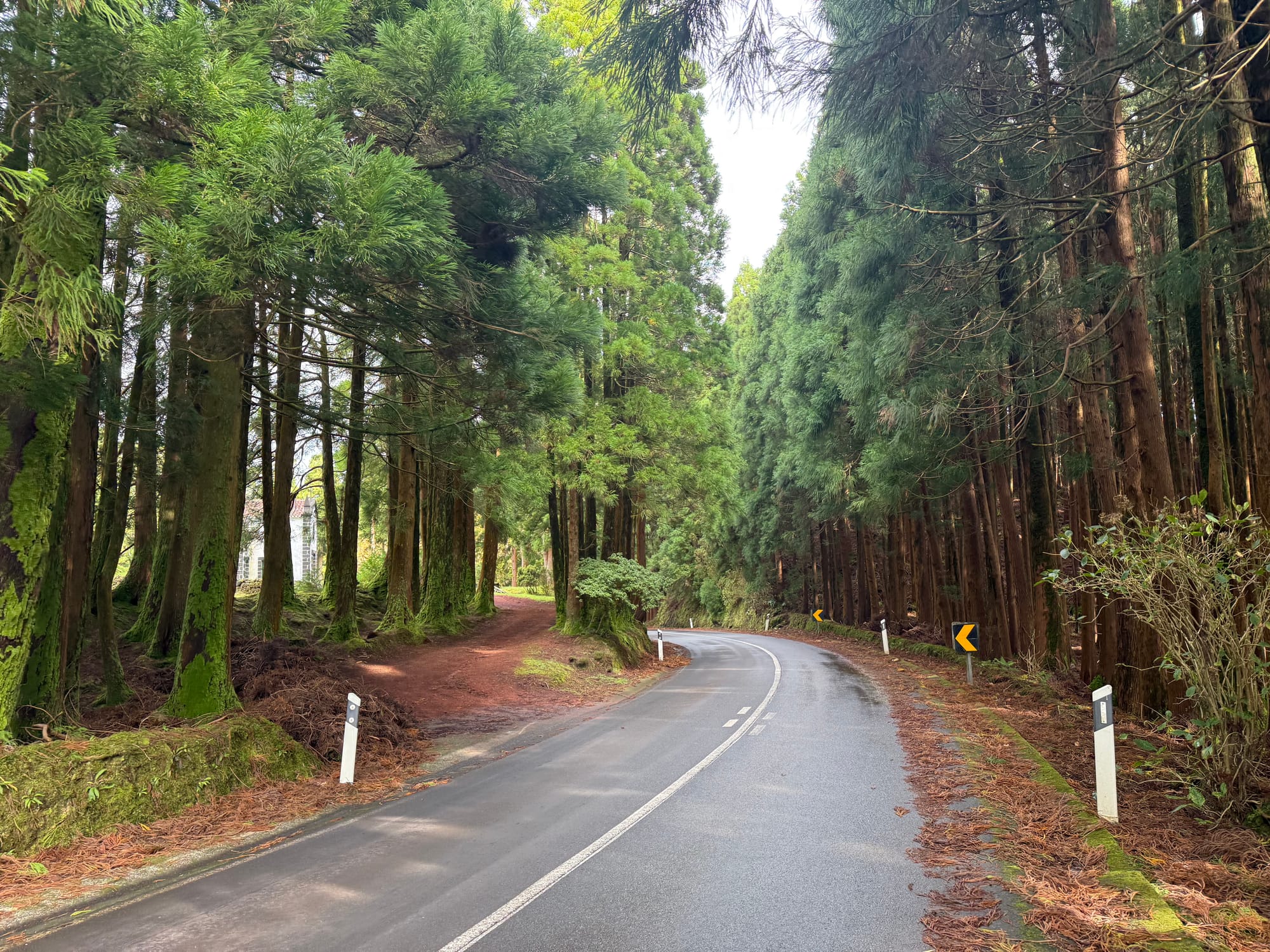
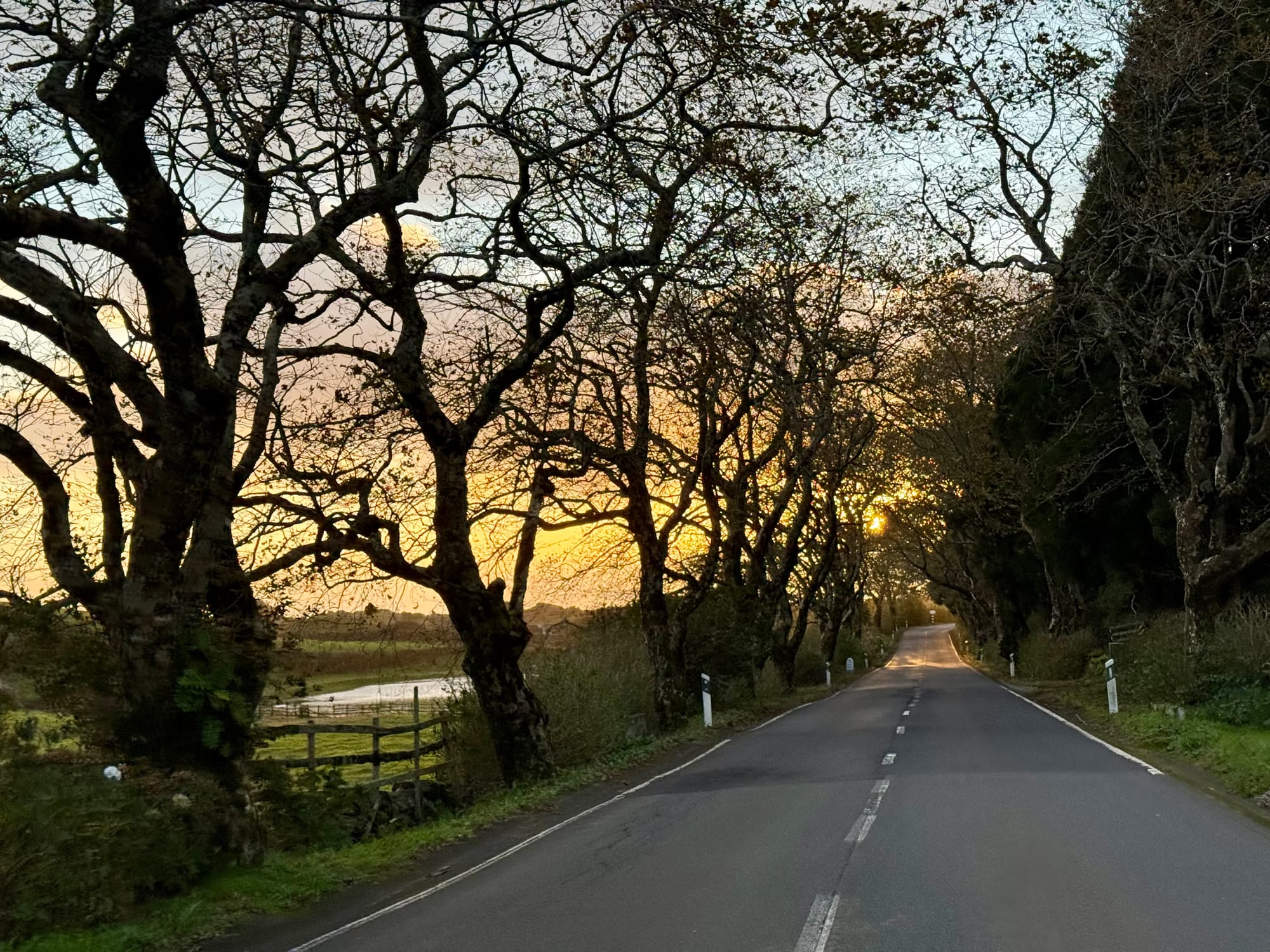
It was just like being in mainland Portugal, except that it wasn't. The roadways were in great shape, and a new, modern highway zipped through the island center. (*With the exception of this one path down to an off beat lookout, in the above photo, during which I thought we'd need a tow given the enormous pot holes!) The signage was very European. And the villages through which we passed felt just like most Mediterranean edifices. Except we were in the middle of the Atlantic Ocean, over a thousand miles from anywhere.
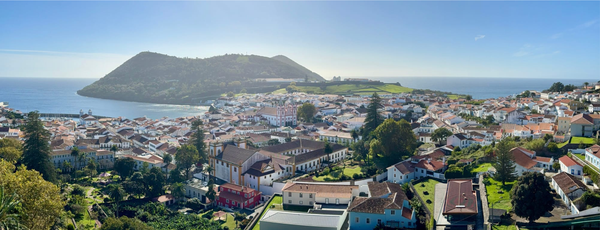
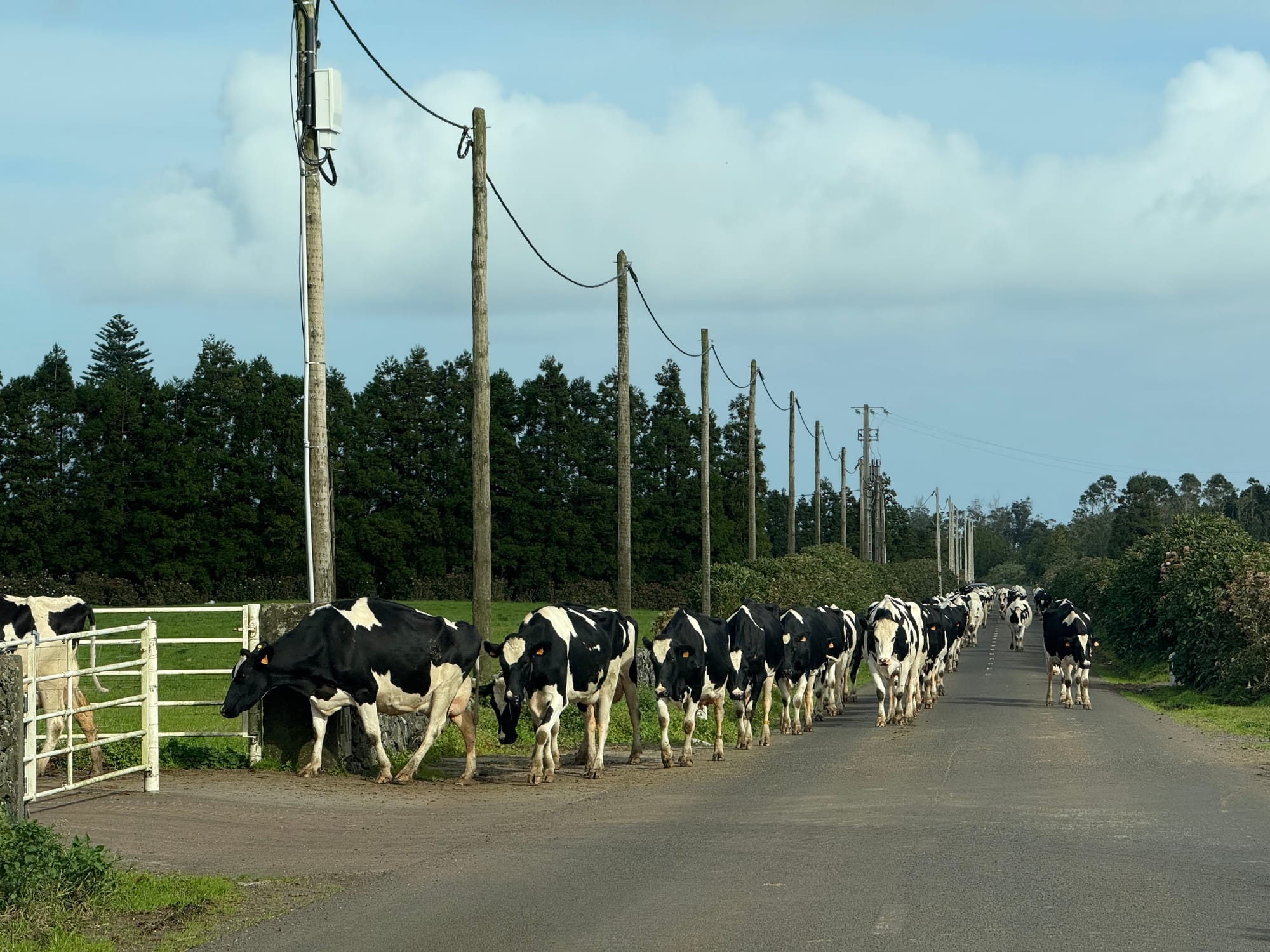
Terceira reminded us of Maui. One side tree-less (filled with the verdant pastures of Azores' dairy farms), the other side densely forested, a shroud on the cone of the big volcano in the center. A few roads crossed the rather uninhabited interior. Around the island runs a series of ring roads, linking villages, big and small, around the perimeter like a pearl necklace of white buildings. It only takes 25 minutes to cross the island on the fancy, fast highway, and just a few hours to encircle the island's edges, making it easy to stop, rest, and explore at our own pace, without the repercussions of a running clock telling us to move on quickly.
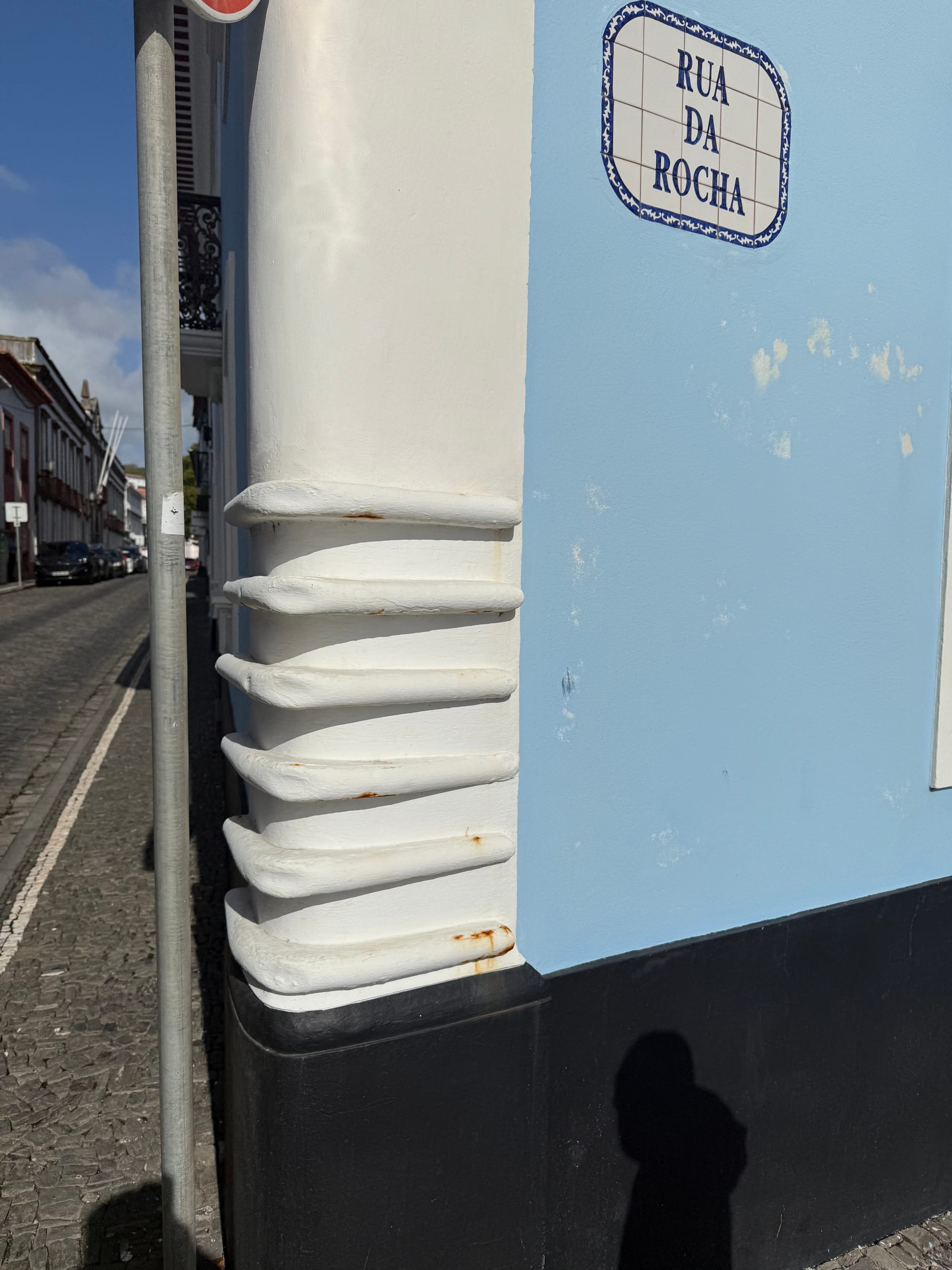
Our base was in Angra do Heroísmo, the main town on the island, a fantasy of a European village, easily one of Portugal's finest. (UNESCO deemed it a World Heritage Site). Granted, it was not easy traversing the streets of Angra's picturesque historical hillside. Most of the cobblestone streets are one-way, and there are few stop signs, making each intersection a precarious moment for the uninitiated. The loud rumble of tires on the cobbles alerts even the near deaf of oncoming vehicles. Each corner had steel beams acting as bumpers, as the turn radius of each was increasingly too small for the ever larger modern car.
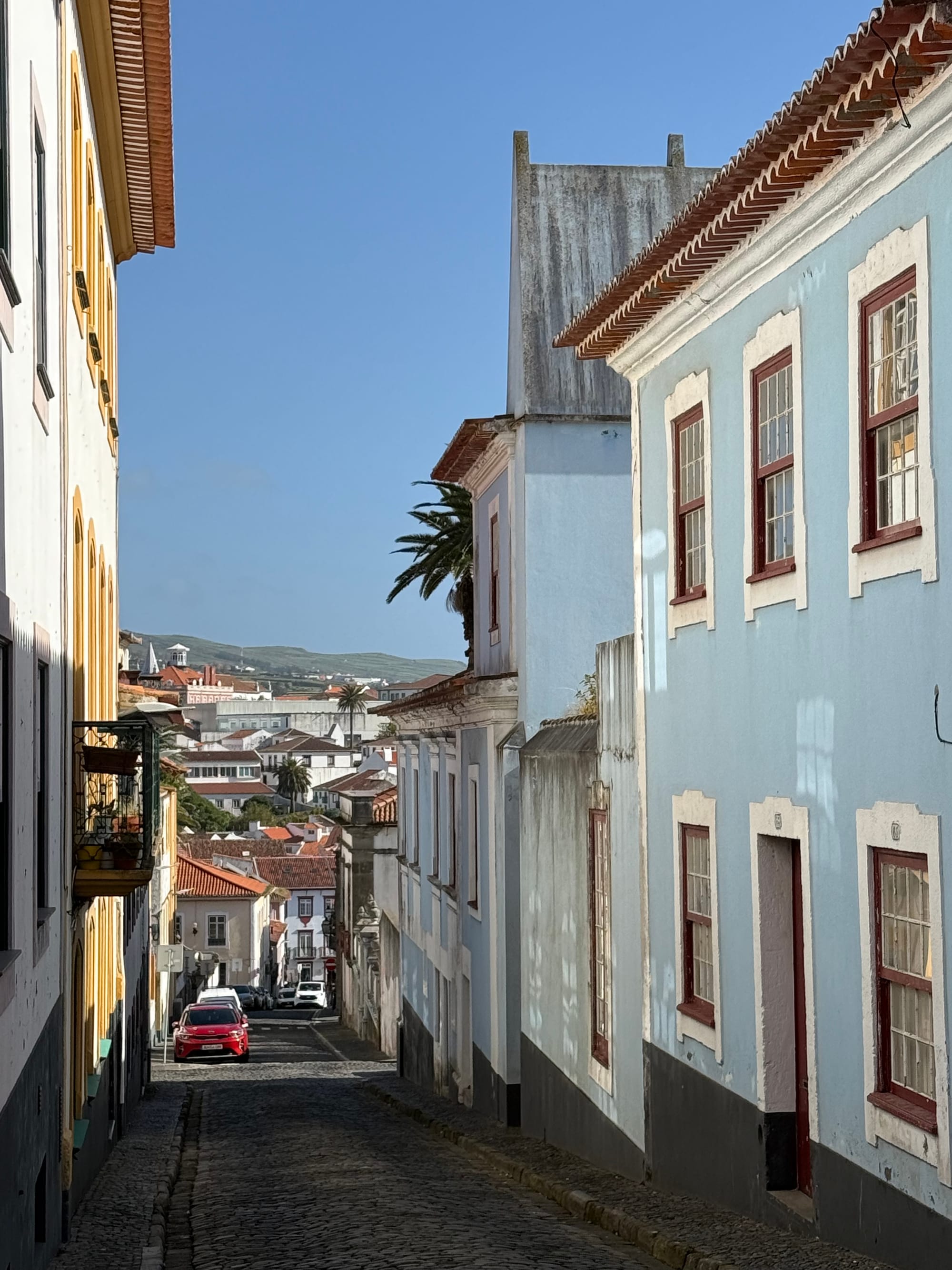
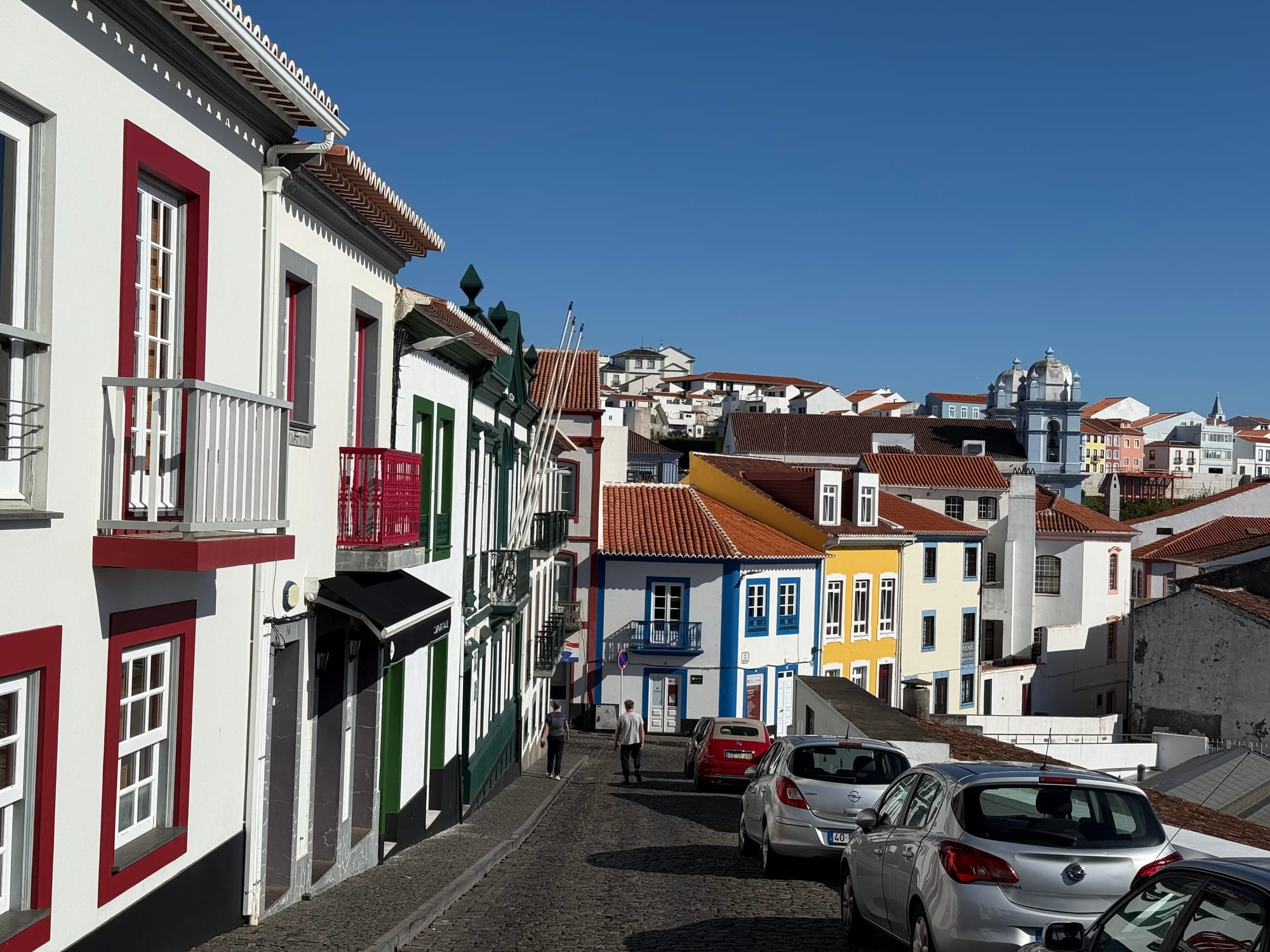
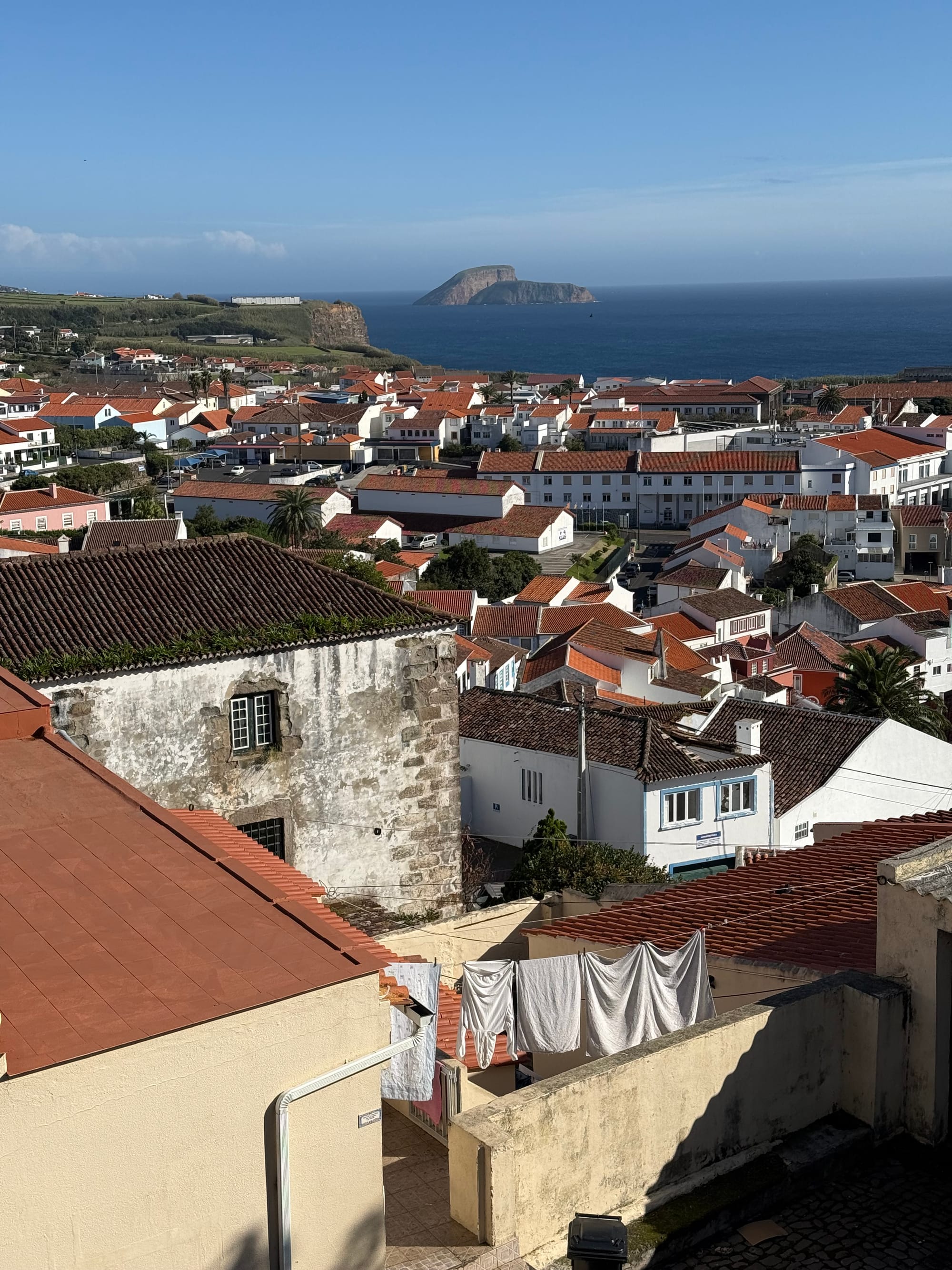
The narrow streets of Angra do Heroísmo.
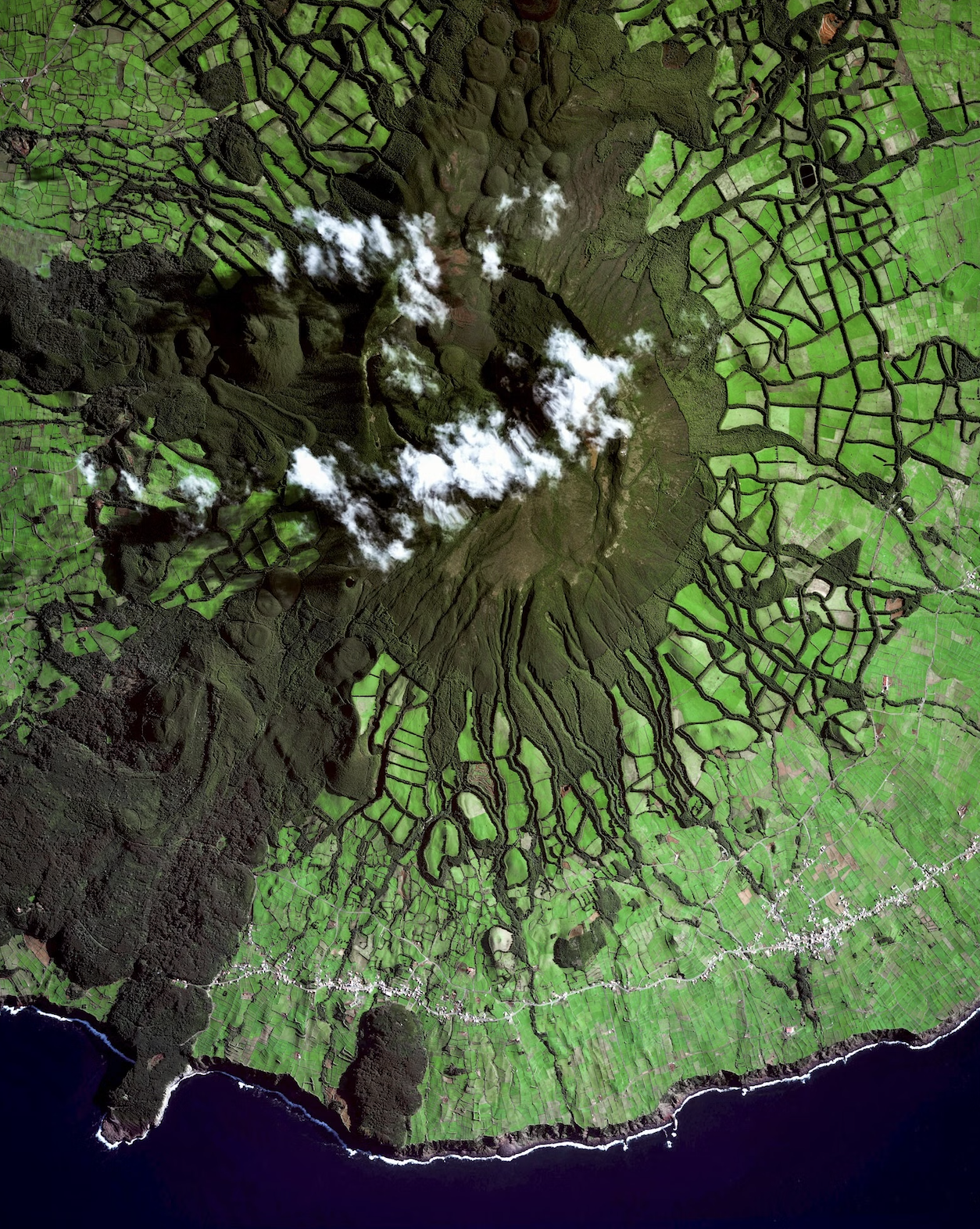
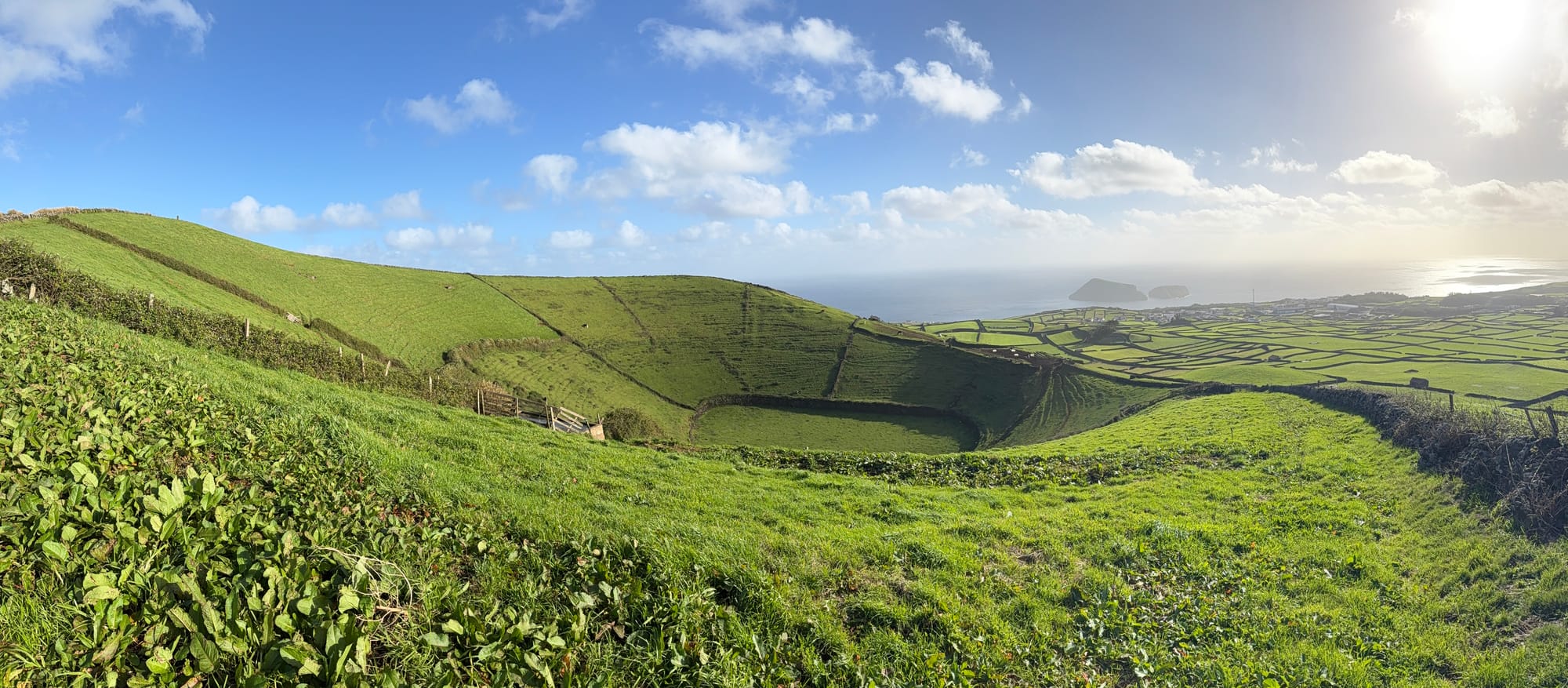
An immersion in Terceira's natural world was what enticed me to want to rent a car and explore the rest of the island. (We used AutAtlantis Car Rental, as they had the best customer service reviews). In looking at Google Maps' satellite view to plan our drive (as our adventure to Hawaii had taught us years earlier), I chanced upon a very strange formation in the pastures of the east: a remnant of a volcanic caldera, now covered with cows. It was one of those odd places, off the typical tourist trails, that I just had to see. After affirming with the hotel concierge that it was legal to cross fences and stroll into cow pastures, and after studying the satellite images of the paths surrounding the area, we made our way there. We parked below and decided to walk up the dirt road, and I'm glad we did as a gate would have stopped us quickly, and it would have been a great challenge to back out of it. It was only a 25-minute ascent, and yes, we did have to straddle over two fences. A few cows gave us odd looks as we bumbled past.
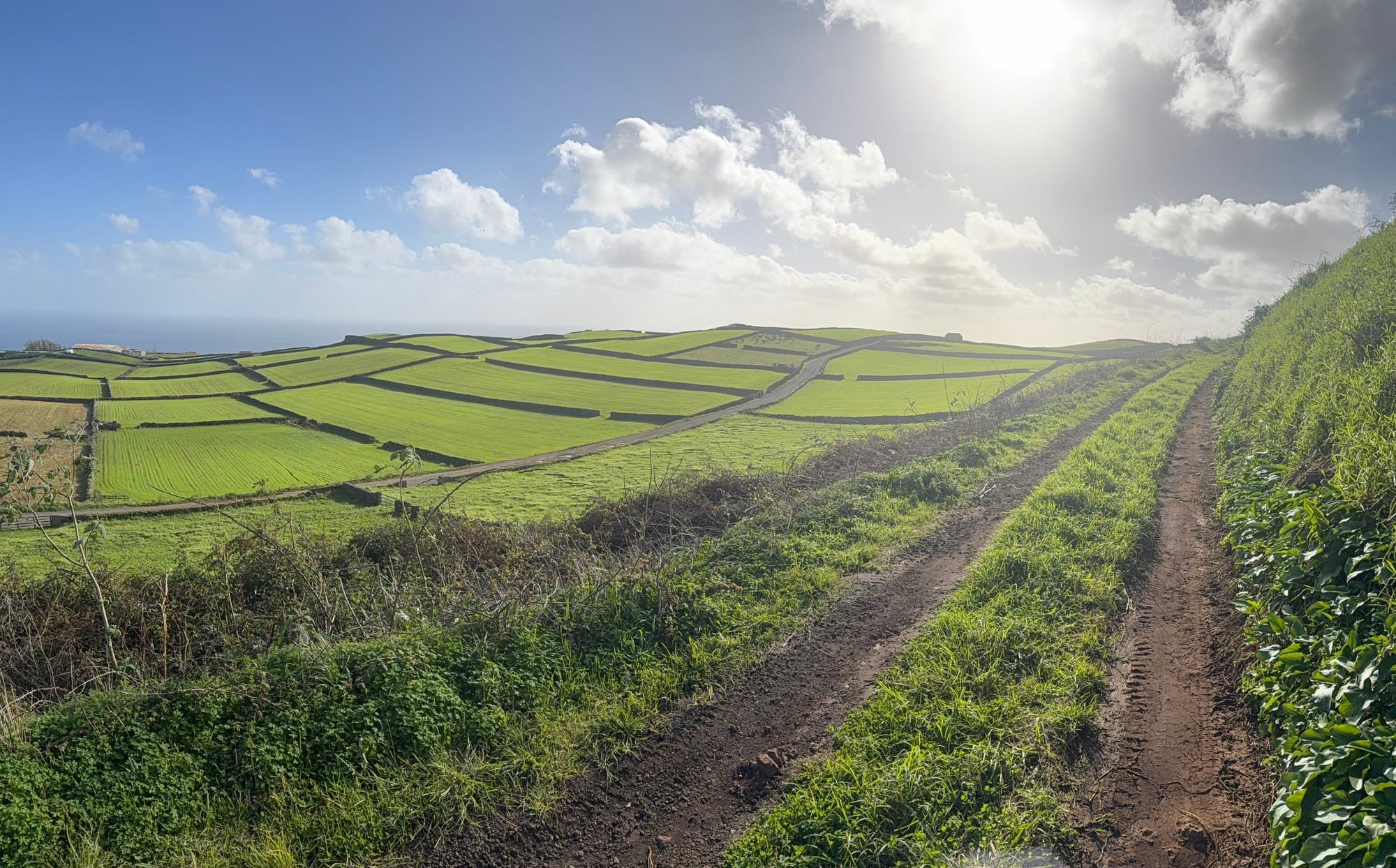
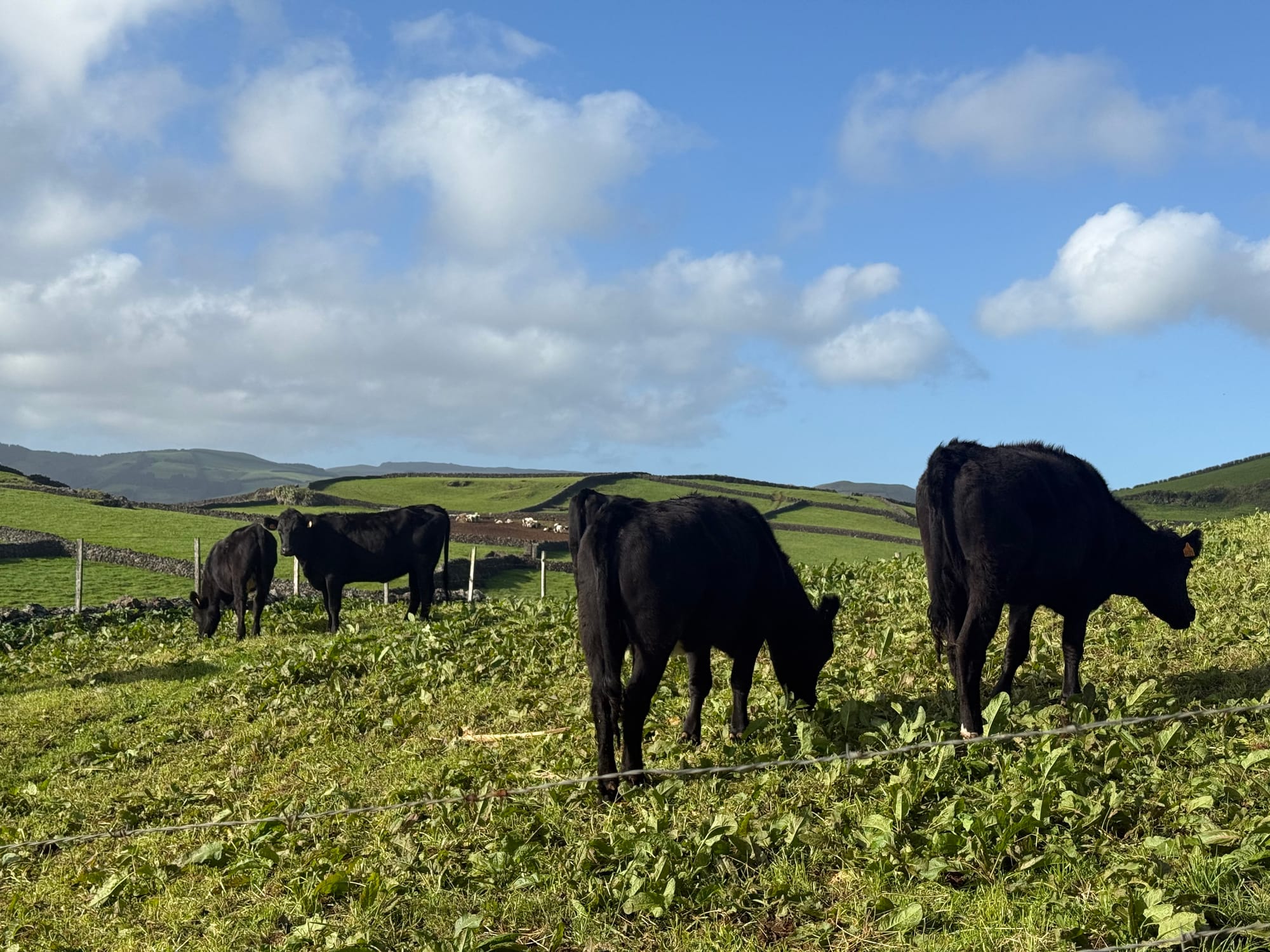
The landscape was extraordinary. It was a bright green that I had only seen in Ireland. Stone walls created geometries across the rolling hills, and the blue ocean stabilized the background. It was so much like that ubiquitous Microsoft background image of the 90s with that perfect green hillside. My eyes were set ablaze with the verdant color. As we hiked up the steep grassy embankment, the volcanic cone revealed itself. In its floor, cows lazily grazed. And when we reached the top, we had a panoramic vista unlike any we had ever seen: a geodésico with the iconic Ilhas das Cabras in the horizon.
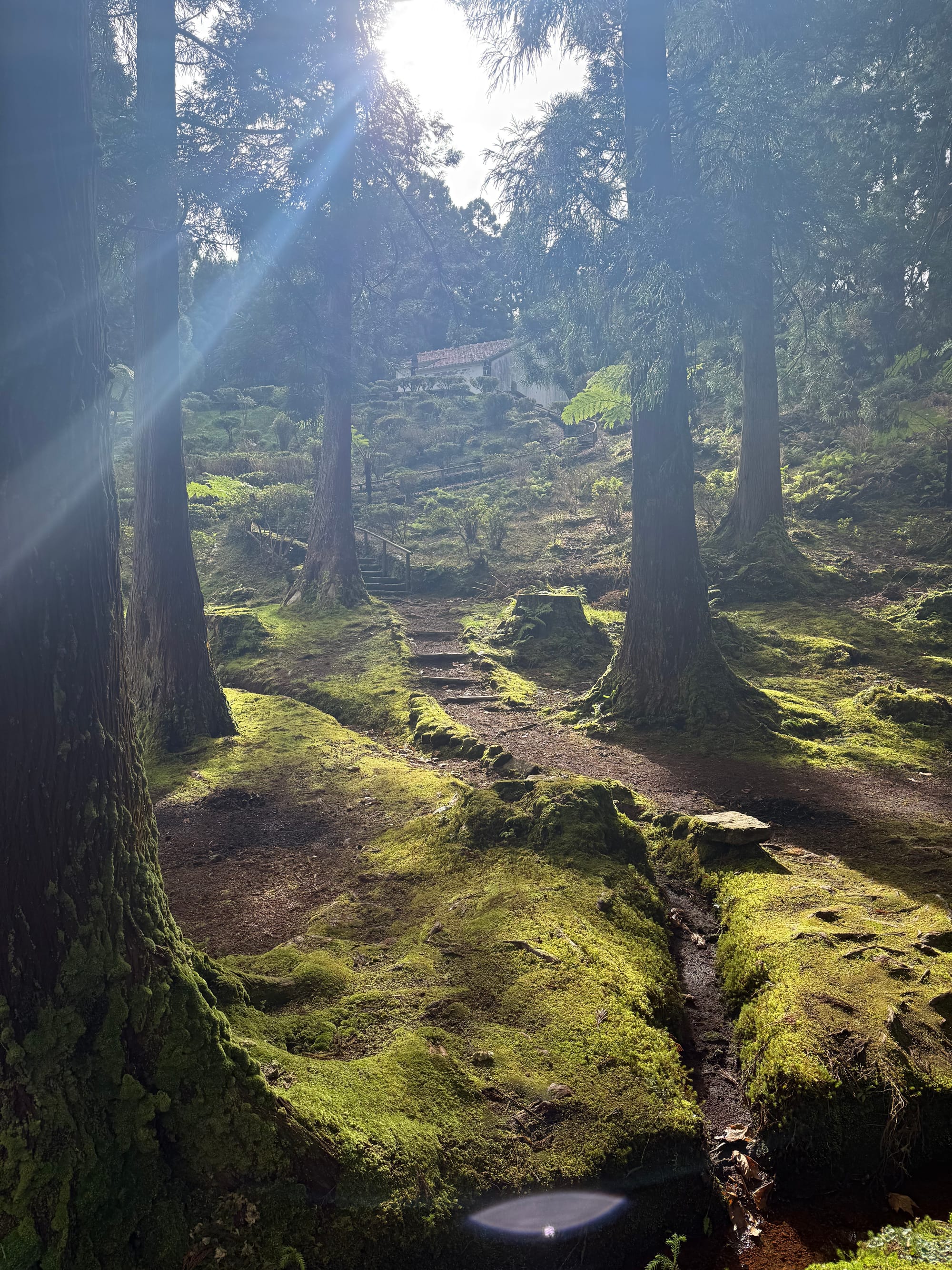
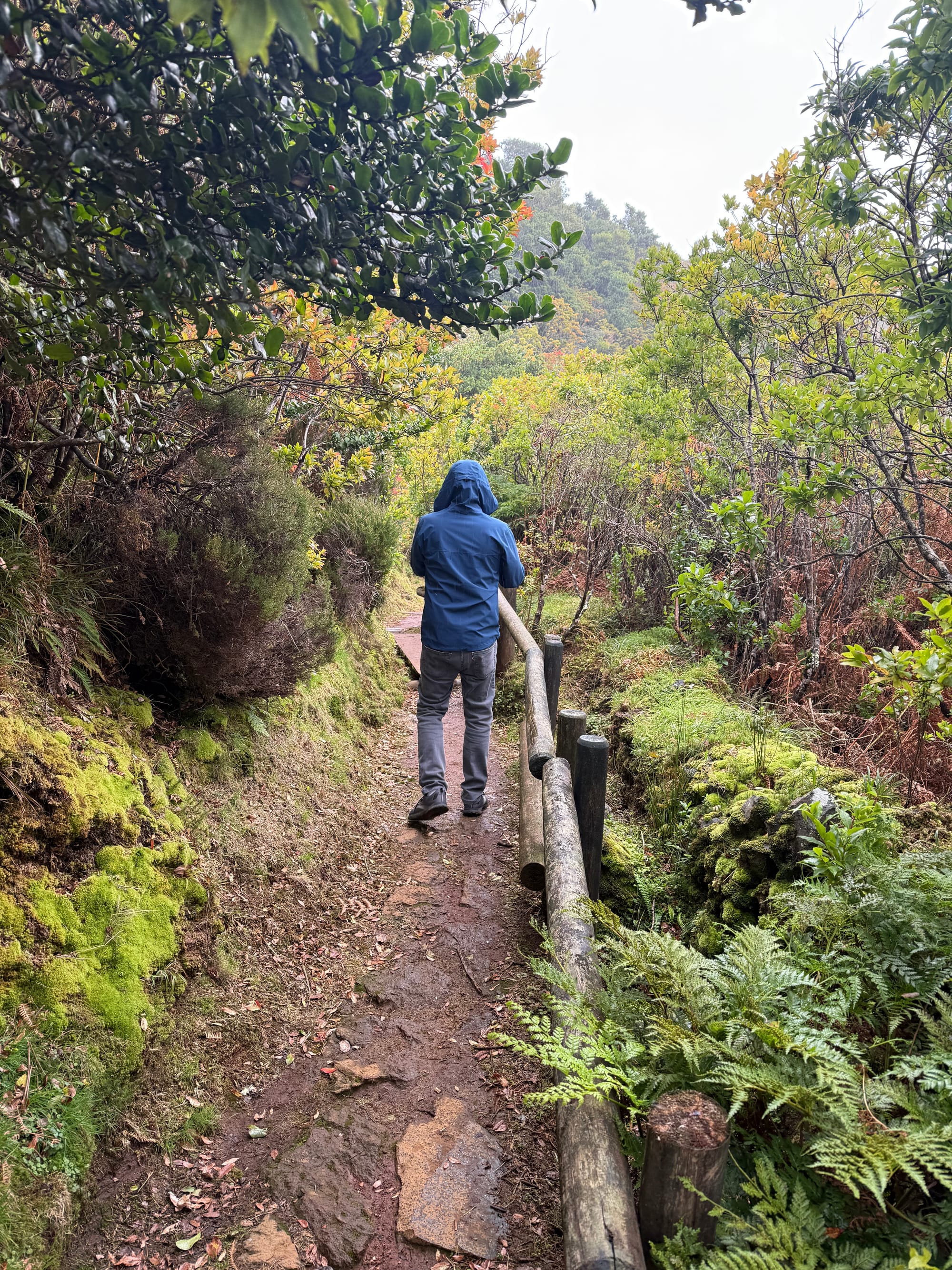
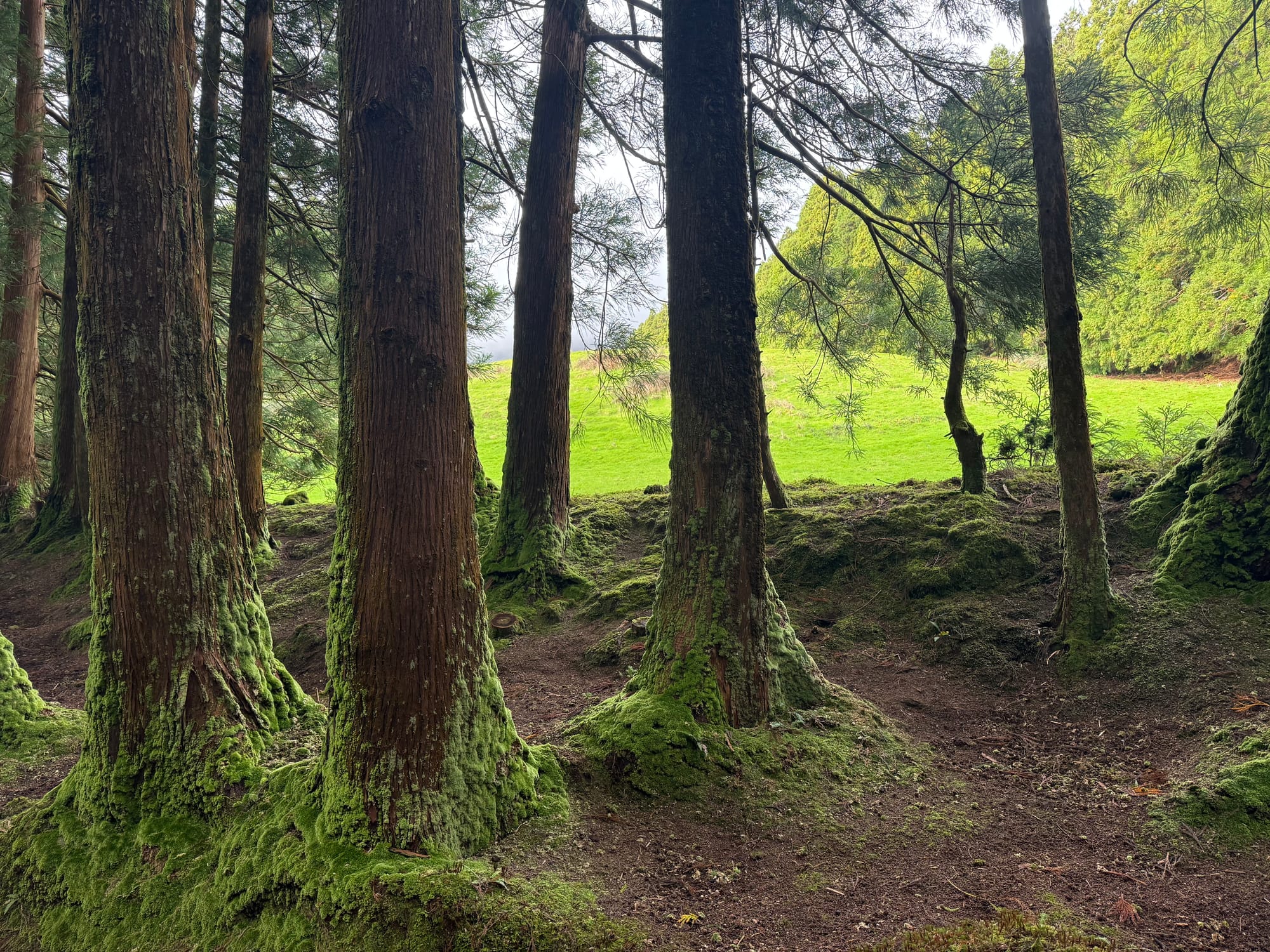
I was determined to see the other side of Terceira's volcanic terrain. Heading westward, the grasses soon became a lush forest. It was like we had suddenly entered Olympic National Park: tall thickets of Japanese Cedars soared above us. Underneath, blankets of tropical Ginger crowded around them. I looked more closely: there were the remnants of thousands of Hydrangea bushes & blossoms which had obviously peaked months before. What a spectacle, I thought, to see the blues and whites of these flowers when they reach their summer bloom! And beside those were Azaleas. And interspersed in-between, towering Australian Tree Ferns. Were we in Fern Gully? Jurassic Park? Some sort of divine botanical garden? It was a botanist's paradise.
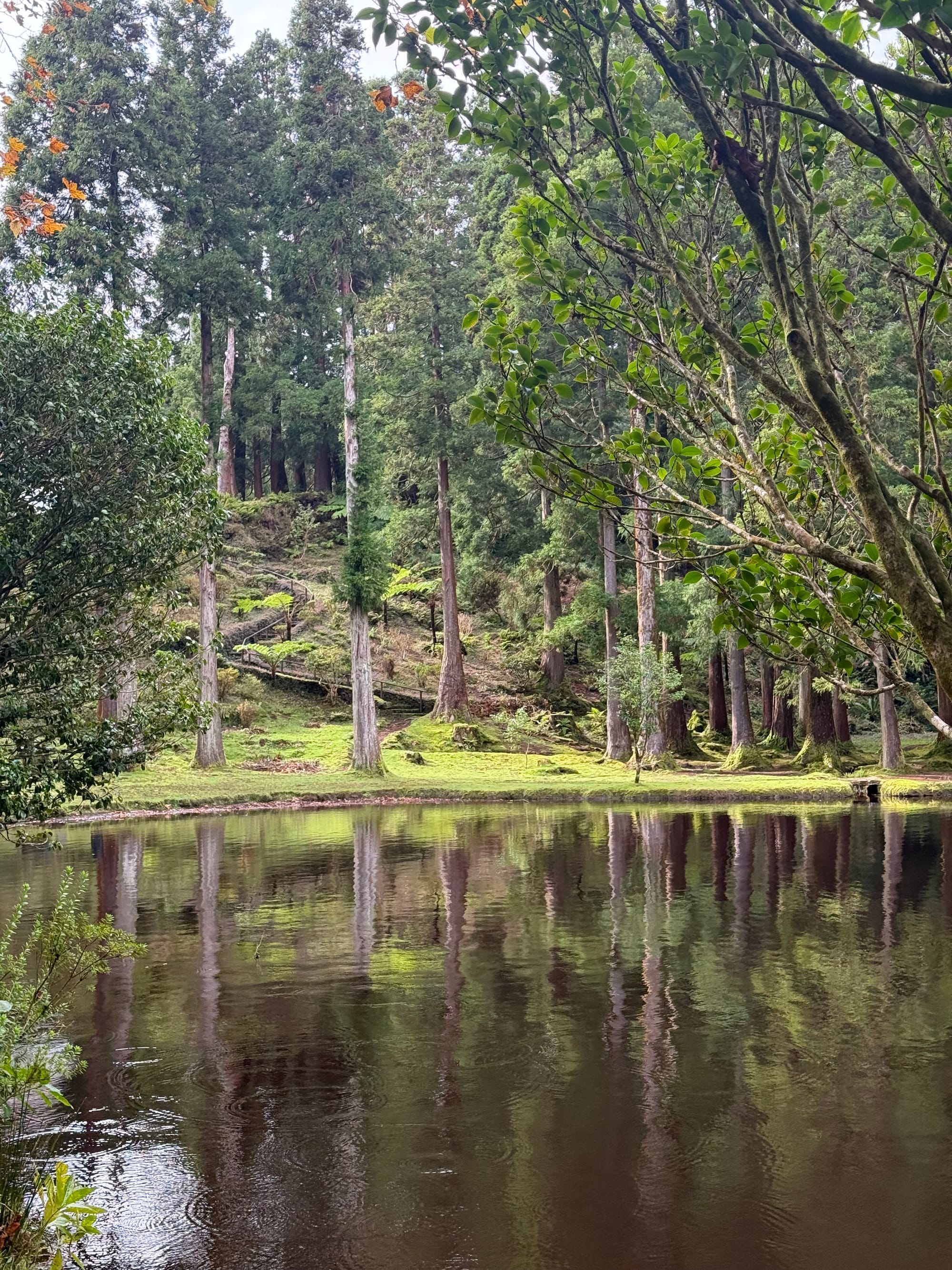
After gawking at the sulfuric clouds shooting out of the crevices atop the Furnas do Enxofre, we stopped at a pristine lake amongst the Cedars, where a few families had come to gather for a picnic. A barrage of colorful roosters, chickens, and ducks quickly welcomed us after getting out of the car, and followed us for our stroll around the lake, clearly eager to get some of our picnic droppings. Amongst the laughter of the local children, our footsteps made mild impressions in the soft carpets of moss and pink floral ground covers that blanketed this primeval forest on the top of the Santa Barbara volcano.
I love swimming, so I was delighted to see a whole string of Piscinas Naturais, or oceanic swimming holes, strewn along the coast. We made sure to stop at a whole host of them along our drive. The most dramatic of which was the cliffside Zona Balnear Escaleiras, whose natural jacuzzi was constantly bashed with big, crystalline waves, backed by the escarpment behind. The southside swims were a bit calmer. Piscinas Naturais de Porto Martins had a larger, more family-friendly setting, backed by grassy knolls and a village. My favorite, however, was one we returned to several times. Smaller than the others, Piscina Natural do Refugo was a quiet place to lay on the rocks to embrace the southerly sun. The water was not quite chilly, surprising for the North Atlantic, with a saltiness that kept me buoyant. It was a lovely way to spend afternoons on our rounds around Terceira.
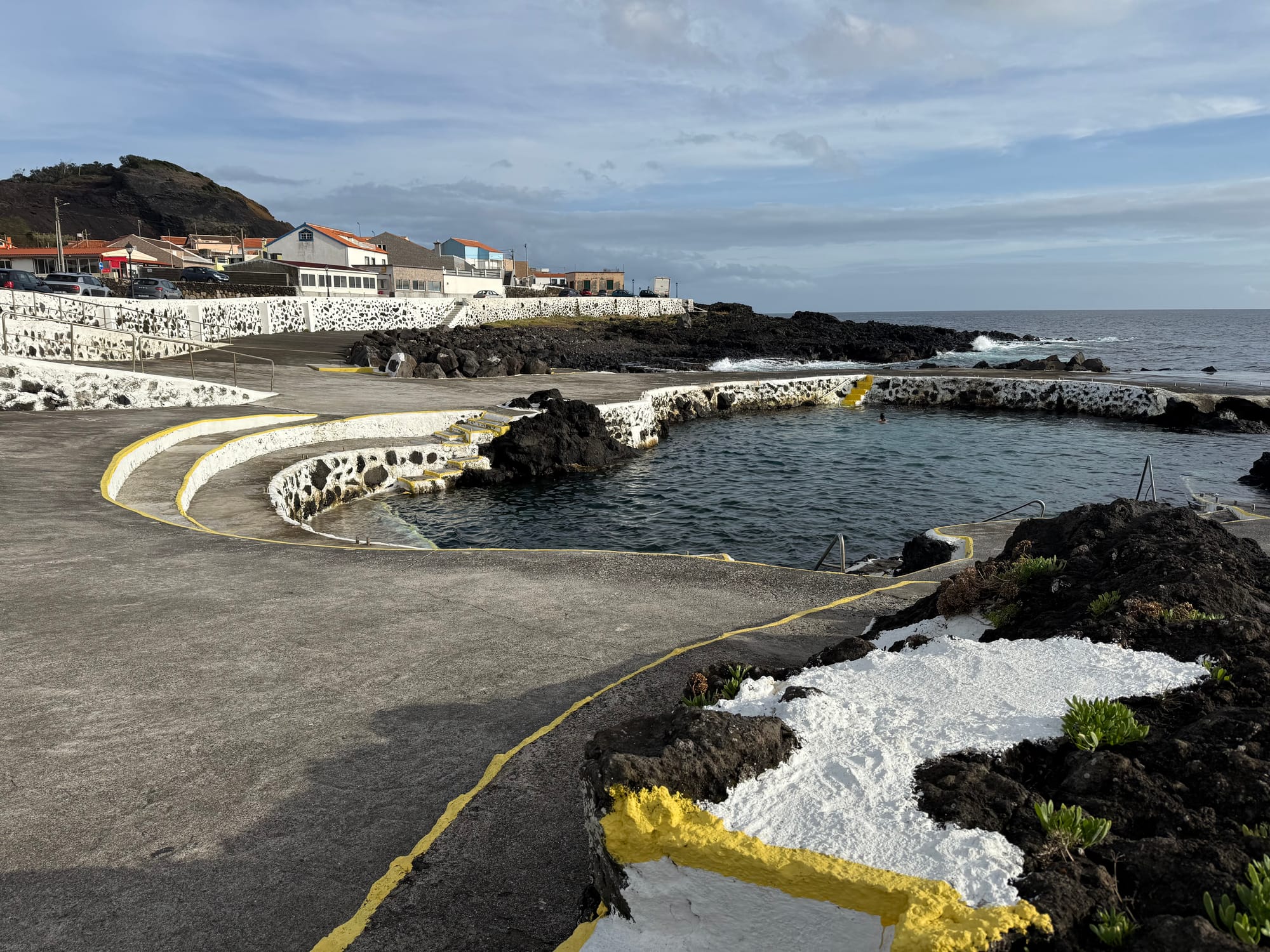
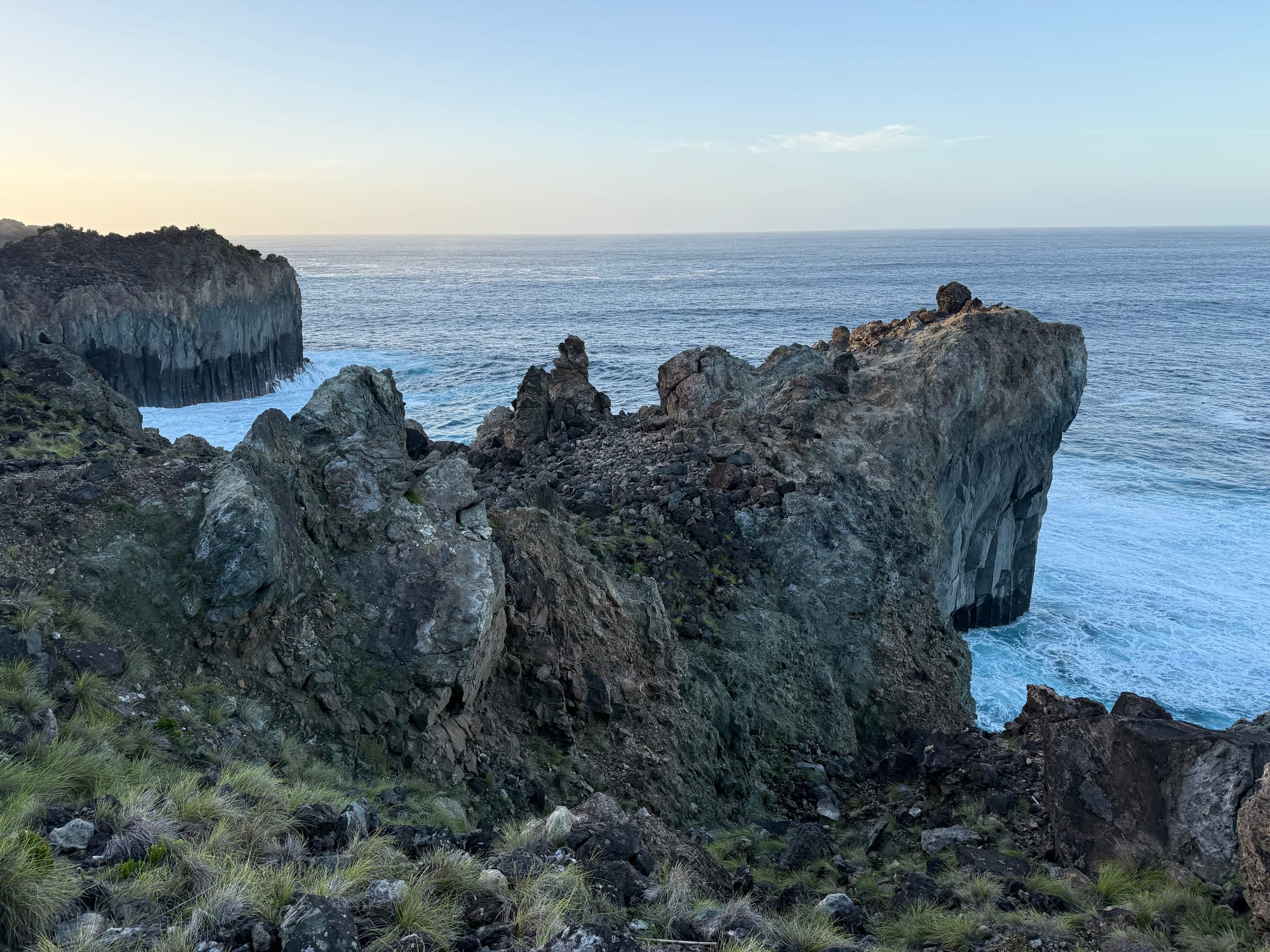
Photo Credit: Syllogi
Syllogi’s ‘On Location’ is a series of trip reports reflecting on our personal travels, as we research and experience the bounty the world has on offer.